Can ChatGPT build a mobile app? It can write most of the code for one, which is genuinely new and genuinely useful. What it cannot do is ship an app, and the gap between those two facts is where a lot of money and several months usually disappear.
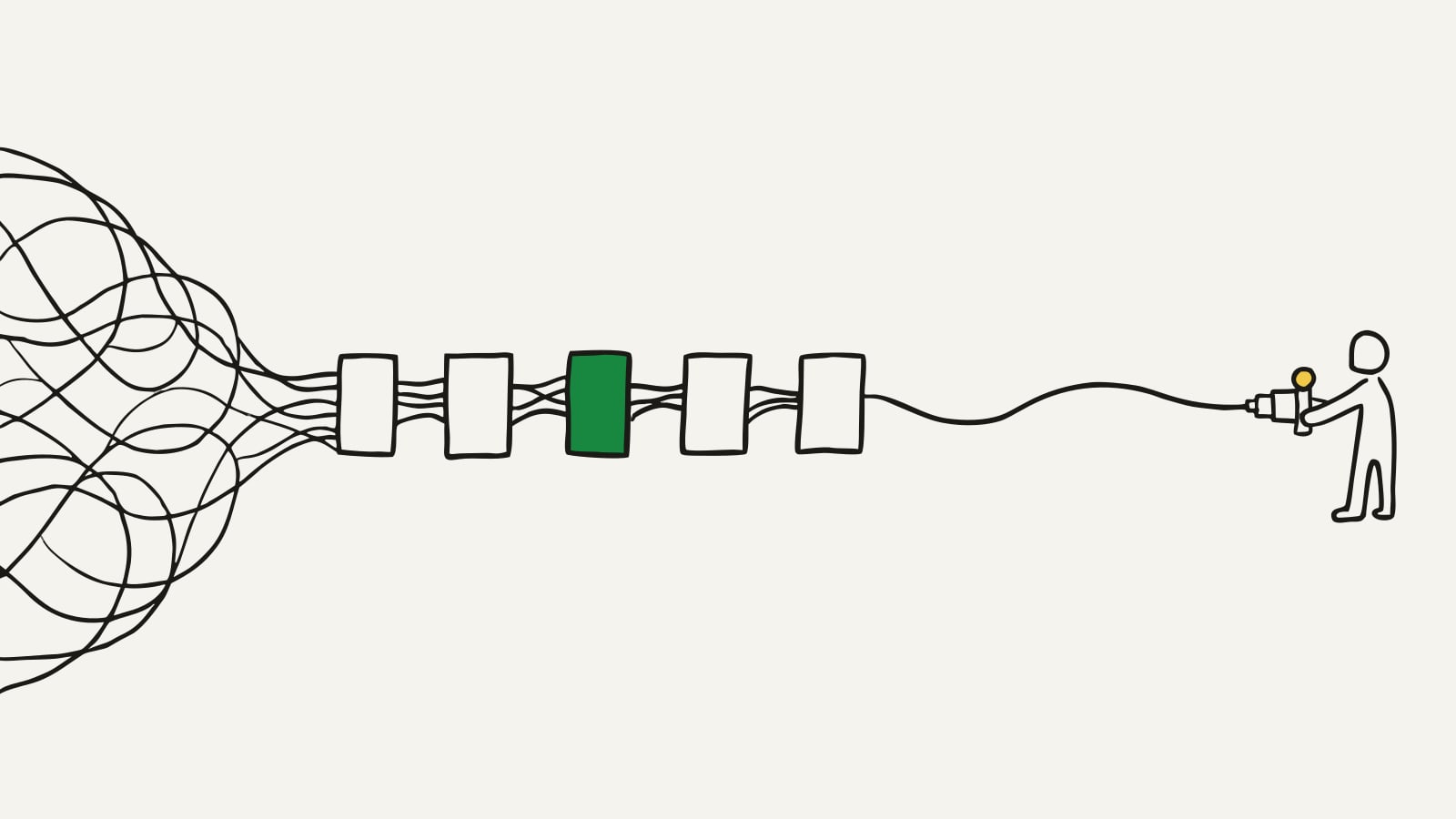
Here is the honest shape of it. ChatGPT is excellent at the first 60% of an app and unreliable about the last 40%, and the last 40% is the part that decides whether real people can use the thing. Not because the model is bad at code. Because the remaining work is judgement, testing and responsibility, and none of those arrive in a chat window.
This post covers what it actually does well, the four walls people hit in roughly the same order every time, and what it takes to get from a working demo to something on a real phone. The same question for websites has a different answer, and whether you can build a website using AI is worth reading if that is really what you are making.
What ChatGPT genuinely does well in app building
This is not a post about AI being useless. The gains are large and they have changed what one person can attempt.
Writing the screens. Layouts, forms, lists, navigation between them. This is the bulk of the visible app and AI produces it quickly and competently.
Explaining as it goes. You can ask what a piece of code does and get a plain answer. For someone learning, this is the best tutor that has ever existed, available at two in the morning.
Getting unstuck. Paste an error, get a likely cause. Sometimes it is wrong. It is still faster than an hour of searching, and the second guess is usually better than the first.
The tedious parts. Test data, repetitive conversions, the fiddly formatting nobody enjoys. AI removes hours of dull work per week and never gets bored.
Trying an idea cheaply. You can build the rough version of a feature in an evening to find out whether it feels right. That used to cost a sprint. Being able to throw away three approaches before lunch is a real advantage.
If you are technical, this is a large productivity gain. If you are not, it is the difference between no app and a demo, which is not nothing.
The four walls, in the order people hit them
They arrive in this sequence with unnerving consistency.
Wall one: it works for you and nobody else. Your app runs on your machine with your data and your assumptions. Then someone types a name with an apostrophe, or loses signal halfway through, or has an older phone, and it falls over. AI writes the path where everything goes right, because that is what you asked for.
Wall two: the second feature breaks the first. Early on, every change works. Around the fifth or sixth feature, fixing one thing breaks something across the app. Nobody designed how the pieces fit, because you were asking for pieces. This is where most self-built apps stall, and it feels like the app turning against you.
Wall three: the invisible things. Accounts, permissions, secret keys, what happens when payment fails halfway. None of these are visible in the app, all of them are load-bearing, and every one of them will be generated confidently and incorrectly at least once. You will not notice, because a security mistake looks exactly like working software.
Wall four: the store. Apple and Google have opinions. Privacy disclosures, account deletion, minimum functionality, no crashing on the reviewer's device. Each rejection is a week. Most first submissions get at least one.
None of these walls are arguments against using AI. They are the reason "ChatGPT built my app" and "my app is ready" are different sentences.
Demo, prototype, product: three different finish lines
Most confusion here comes from one word doing three jobs. When someone says they built an app with AI, they usually mean the first row of this table. When they imagine launching, they mean the third.
| Finish line | What it is | Realistic time with AI help | What is still missing |
|---|---|---|---|
| Demo | Screens that click, on your device | A weekend | Real data, other users, anything going wrong |
| Prototype | A friend can try it on their phone | 2 to 4 weeks | Accounts, payments, security review, store listing |
| Product | Strangers can sign up and pay | Months | All of the above, plus support and maintenance |
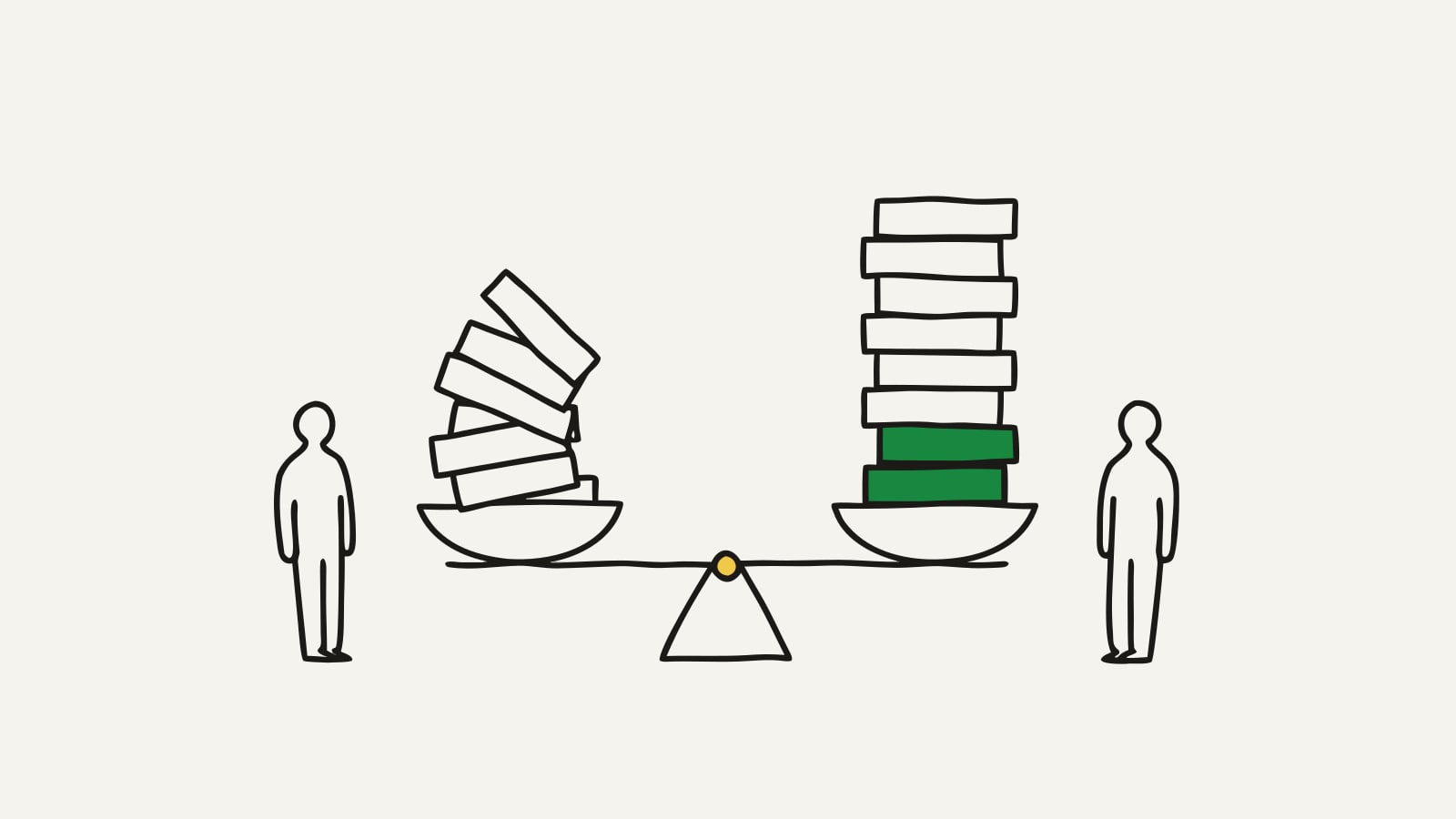
The rows are not sizes of the same thing. They are different kinds of work. AI compresses the first row from weeks to a weekend, which is remarkable. It barely touches the third row, because that row is testing, judgement and accountability.
If you want the full arithmetic on timelines from either direction, we break it down in how long it takes to build an app.
Find out what is left between your demo and a launch
Describe what you have and what it needs to do. You will get a free itemised plan with the modules, the phases and an estimated total, so the remaining work stops being a guess.
Get your build planWhat it takes to get from ChatGPT to the App Store
If you are set on this route, these are the steps that actually stand between you and a live app. None are optional.
Someone reads the code. Not to rewrite it, to check the invisible things: how data is stored, who can reach what, where the keys live. This is a few hours of a professional's time and it is the highest-value money in this entire list.
Test on real devices, not your own. Borrow three phones, including an old one. Hand them to people who have never seen the app and say nothing. Watch what they tap. This finds more problems in twenty minutes than a week of solo testing.
Decide what happens when things fail. No signal, declined card, wrong password, image too large. Write down the desired behaviour first, then ask AI to build it. Reversing that order is why generated apps handle failure so badly.
Prepare the store submission properly. Privacy details, account deletion, screenshots, a description. Read the current guidelines rather than trusting a summary, since they change and a rejection costs a week.
Plan for maintenance. Phones update twice a year and apps break without being touched. An app is a thing you keep, not a thing you finish.
That list is not long, and it is not beyond a determined non-technical founder. It is also the part where a few hours of professional help is worth many times what it costs, and knowing how to brief a developer makes those hours far cheaper.
What about Cursor, Claude Code, Replit and the rest?
Worth clearing up, because "can ChatGPT build an app" is usually really a question about the whole category, and these tools are not interchangeable.
Chat tools like ChatGPT are conversational. You describe, they write, you copy the result somewhere else. Best for learning and for solving pieces of a problem rather than producing a whole app.
Coding tools that sit inside a real development setup can see your entire project and change many files at once. They produce far more coherent results, and they quietly assume you can read what changed.
App builders go from a description straight to something hosted and running. Fastest route to a live demo, most limiting the moment you want something the platform did not anticipate.
Pick whichever suits how you work. The category matters less than the one property they all share: none of them will tell you when they have got it wrong. That is what makes the review step below non-optional regardless of which tool wrote the code.
When building with ChatGPT is the smart move
Three cases where this route is clearly right.
You are testing whether the idea has legs. Build the rough version, put it in front of ten people, learn what you were wrong about. Do not build it properly first. Building the wrong thing well is the most expensive outcome available.
The app is genuinely simple and for a small group. One core action, a handful of users, nothing sensitive, no payments. An internal tool for your own team is a great fit and the stakes match the method.
You want the skill. If learning to build is part of the point, this is the fastest tutor available and the hours are an investment rather than a cost. Just be honest that you are learning, not shipping.
And the case where it is usually wrong: the app is how the business makes money, it holds customer data or payments, and it needs to work on the first day rather than the fifth attempt. There, AI belongs in the process as a tool for the people building it, not as the builder. The cost comparison for doing it yourself either way is in how much it costs to make an app by yourself.
Use it for the demo, price the real thing
Can ChatGPT build a mobile app? It can build you a convincing demo in a weekend, and that demo is a genuinely useful thing to have. Build it. Show it to people. Find out whether anyone wants it before anyone spends real money.
Then get the real number, because the demo will not tell you what the finished version costs and neither will the internet. It depends entirely on what your app has to do.
Get an itemised build plan: describe your idea in plain English and get the modules, the phases and an estimated total for free. Compare it against your evenings, decide with numbers, and keep the AI for the parts it is actually good at.
Common questions
Can ChatGPT build a mobile app?
It can write most of the code for one, and with the right prompting it can get you a demo that runs. What it cannot do is take responsibility for the result. Nobody is checking whether the app handles bad input, protects user data, survives a hundred people at once, or passes app store review. Those steps are still human work, and they are most of the distance between a demo and an app.
Can ChatGPT build an app if I cannot code at all?
You can get surprisingly far, and then you stop very suddenly. Generating code is the easy half. The hard half is knowing which of two plausible answers is correct, why the app broke after a change that looked harmless, and what the error message actually means. Without any technical reading ability you can produce something that runs and have no way to tell whether it is sound.
How long does it take to build an app with ChatGPT?
A clickable demo is a weekend. Something a friend can try on their own phone is usually two to four weeks. Something strangers can sign up for and pay through is still months, because that last stretch is accounts, payments, testing on real devices, store review and fixing what real use exposes. AI compresses the first stretch dramatically and the last one barely at all.
Is code written by ChatGPT safe to use?
It is often fine and occasionally quietly dangerous, and the two look identical from the outside. The recurring problems are permissions that are too generous, secret keys left where they can be read, and missing checks on what users send in. None of these stop the app working, which is exactly why they survive to launch. Anything holding personal data or money needs a human review before it goes live.
Can you put a ChatGPT-built app on the App Store?
Yes. Apple and Google do not care who or what wrote the code, they care whether the app meets their guidelines. In practice AI-built submissions get rejected for the same handful of reasons: missing privacy details, accounts that cannot be deleted, thin functionality, or crashes on the reviewer's device. Each one is fixable, and each one costs a review cycle to discover.
Get a build plan for your idea
Describe what you want to build and get a clear, itemized plan in a couple of minutes.
Get your build plan